
Cardano Rewards: How Are Rewards Calculated?
Understand how Cardano staking rewards are generated, what affects your ADA earnings, and why choosing the right stake pool matters for long-term results.
Cardano staking is widely known as a reliable way to earn passive income, but many users still don’t fully understand how those rewards are actually calculated.
At first glance, it may seem like rewards are fixed or guaranteed, but in reality, they are the result of a carefully designed system that balances fairness, performance, and network participation.
If you are staking ADA or planning to start, understanding how rewards are generated can help you set realistic expectations and make smarter decisions. In this guide, we’ll explain how Cardano staking rewards work in practice and what really determines how much you earn over time.
- Cardano rewards are generated when stake pools help validate the network and produce blocks.
- Your rewards depend on your ADA stake, pool performance, pool saturation, fees, and network conditions.
- A reliable, balanced, and transparent pool can help create more consistent long-term staking results.
How Cardano Rewards Are Generated
Cardano uses a Proof of Stake system where rewards are distributed based on participation in the network rather than mining power. Instead of relying on energy-intensive hardware, the network selects stake pools to validate transactions and produce new blocks.
Each time a pool successfully produces a block, it receives rewards from the network. These rewards are calculated at the end of each epoch, which lasts approximately five days, and then distributed among all participants in that pool.
A portion of the rewards goes to the pool operator for maintaining the infrastructure, while the rest is shared among delegators based on how much ADA they have staked. This process repeats continuously, creating a steady cycle of reward distribution that reflects both network activity and pool performance.
What Influences Your Staking Rewards
Although Cardano’s reward system is designed to be stable, the amount you earn is not exactly the same in every situation. One of the main factors is the size of your stake, as rewards are distributed proportionally, meaning that larger amounts of ADA naturally generate higher returns.
At the same time, the performance of the stake pool plays a crucial role, since pools that consistently produce blocks are able to generate more rewards over time. Another important element is saturation, which refers to how much total stake is assigned to a pool.
When a pool becomes too large, rewards begin to decrease as a way to encourage decentralization, while pools that are too small may not produce blocks frequently enough to generate steady income. Fees also affect your final rewards, but they are usually less significant compared to performance and stability.
In addition to these factors, overall network conditions such as the total amount of ADA being staked can cause slight variations in returns, making the system dynamic but still predictable in the long run.
Choosing the Right Pool to Maximize Rewards
While the reward system itself is automated, the most important decision you make is choosing the right stake pool. Even with the same amount of ADA, two users can earn different rewards depending on where they delegate.
A well-managed pool that maintains consistent performance, avoids saturation, and operates with transparency will generally provide more reliable results over time. This is why many experienced users gradually move away from large, overcrowded pools and instead choose smaller or mid-sized pools that focus on long-term stability and growth.
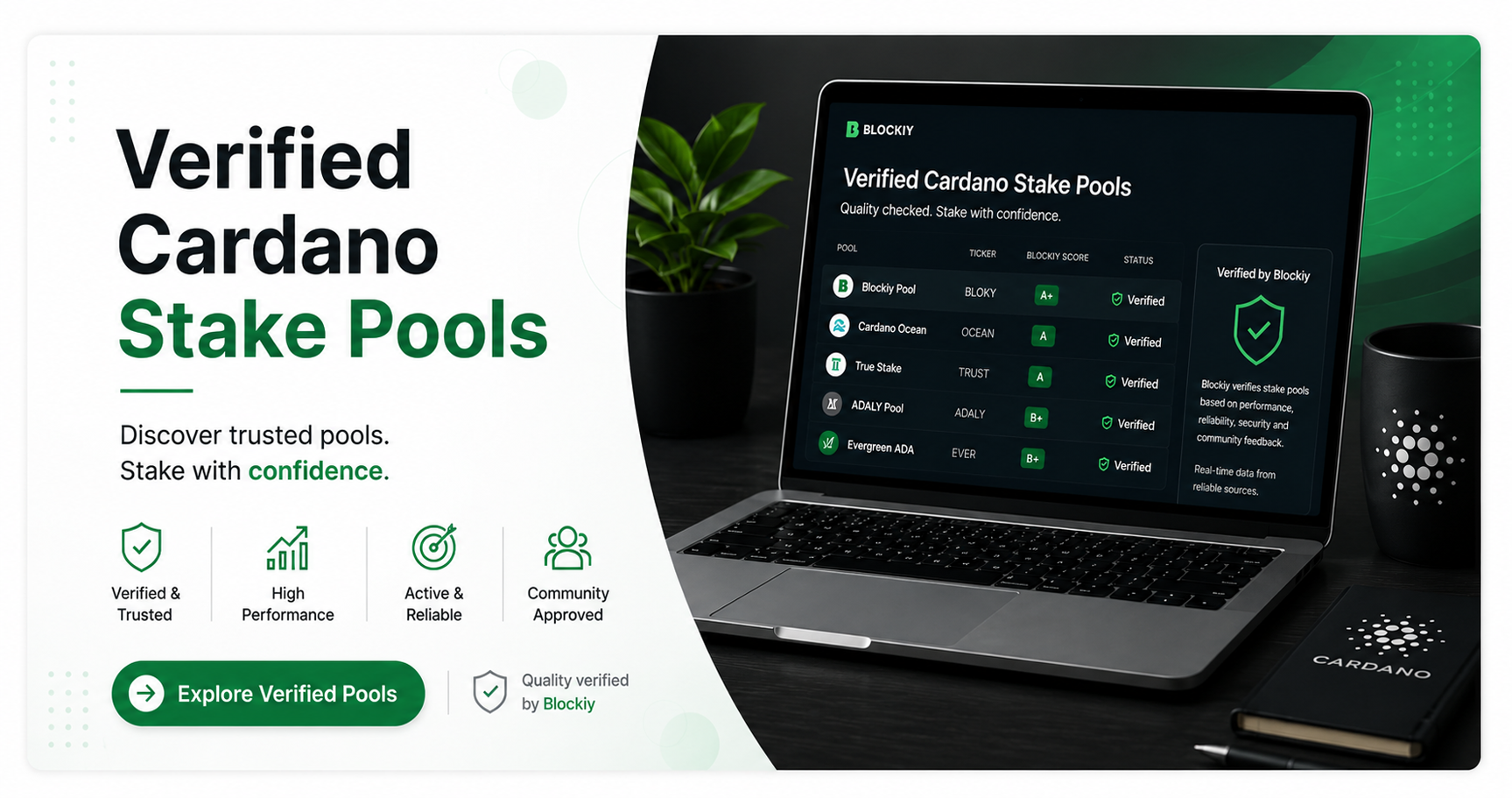
One example of this type of pool is the Blockiy Stake Pool (BLOKY), which is designed to maintain balanced participation while delivering consistent performance. By avoiding oversaturation and focusing on reliability, it aligns well with how Cardano’s reward system is intended to function.
Delegating to such a pool is straightforward, and by simply searching for the ticker BLOKY in your wallet, you can begin earning rewards while keeping full control of your ADA at all times.
Conclusion
Cardano staking rewards are calculated through a system that prioritizes fairness, consistency, and decentralization. While the underlying mechanics involve several variables, the overall concept remains simple: your rewards depend on your stake, the performance of your chosen pool, and the conditions of the network.
By understanding how this system works and selecting a reliable pool, you can make the most of your staking experience and build steady, long-term growth.
Rather than focusing on short-term gains, Cardano staking is designed to reward patience and smart decision-making, making it one of the most accessible and sustainable ways to earn passive income in the crypto space.