
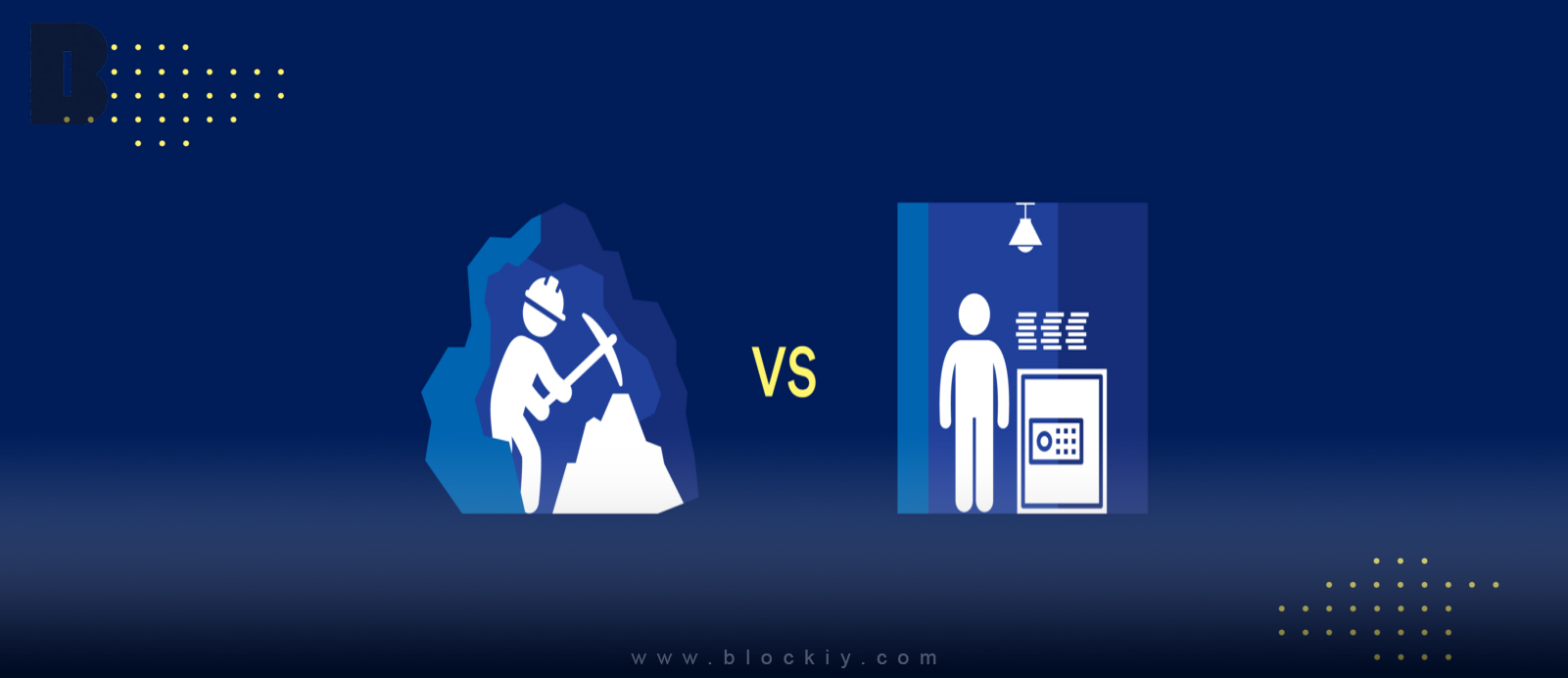
How Staking Is Replacing Crypto Mining
Learn why blockchain networks are moving from energy-intensive mining toward staking, and how Cardano makes participation more efficient, accessible, and sustainable.
For many years, cryptocurrency mining was considered the foundation of blockchain networks such as Bitcoin. It relied heavily on powerful hardware, significant electricity consumption, and technical expertise to validate transactions and secure the network.
However, the landscape of blockchain technology is evolving rapidly. A major shift is now taking place, where staking is emerging as a more efficient, accessible, and sustainable alternative.
As new networks adopt modern consensus mechanisms, staking is increasingly becoming the preferred method for participating in blockchain ecosystems and earning rewards.
- Mining depends on expensive hardware, electricity, and technical maintenance.
- Staking allows users to support blockchain networks by delegating or committing crypto assets.
- Cardano was built on Proof of Stake from the beginning, making it more energy-efficient and accessible.
From Mining to Staking: What’s Changing
Crypto mining operates on the Proof of Work model, where participants use high-powered machines to solve complex mathematical problems in order to validate transactions and add new blocks to the blockchain.
While this system has proven to be secure, it comes with significant drawbacks, including high energy consumption, expensive hardware requirements, and increasing difficulty over time. These challenges have gradually limited participation and pushed mining toward centralization in large-scale operations.
Staking, on the other hand, is based on the Proof of Stake model, where users participate by delegating or committing their cryptocurrency to help validate the network. Instead of competing with computational power, validators are selected based on the amount of stake they hold or represent.
This approach removes the need for costly hardware and dramatically reduces energy usage, making blockchain participation more accessible to a wider audience.
Why Staking Is Becoming the Standard
One of the most important reasons for the shift toward staking is efficiency. Unlike mining, which consumes massive amounts of electricity, staking operates with minimal energy requirements, making it far more sustainable in the long run.
At the same time, staking significantly lowers the barrier to entry. Users no longer need specialized equipment or technical setups. All that is required is holding cryptocurrency in a compatible wallet and choosing a stake pool. This simplicity allows both beginners and experienced users to participate without complexity.
Another key advantage is the ability to earn in a more passive and predictable way. While mining is highly competitive and resource-intensive, staking offers a smoother experience where users can remain engaged with the network without constant management.
In addition, staking supports better decentralization. Mining often concentrates power in large operations with access to significant resources, whereas staking allows more individuals to participate, helping distribute control more evenly across the network.
Industry-Wide Transition
The move from mining to staking is not just theoretical — it is already happening across the industry. One of the most notable examples is Ethereum, which transitioned from Proof of Work to Proof of Stake, signaling a major shift in how leading blockchains approach scalability and sustainability.
Many newer blockchain projects are also launching with staking as their core mechanism from the start, reflecting a broader trend toward more efficient and adaptable systems.
As adoption increases, both developers and investors are showing a stronger preference for staking-based networks. The ability to combine performance, sustainability, and user participation makes staking a more future-ready solution for modern blockchain applications.
Why Cardano Stands Out
Cardano is one of the leading blockchain networks built entirely on the Proof of Stake model from day one. Unlike older systems that required a transition, Cardano was designed to avoid the limitations of mining altogether.
Its architecture focuses on energy efficiency, fair reward distribution, and long-term scalability, making it well-positioned for the future of blockchain technology.
As the ecosystem continues to grow, participation through staking becomes an essential part of supporting the network. Choosing a reliable stake pool plays a key role in this process, especially for users who are moving from traditional mining concepts toward more modern and sustainable alternatives.
Blockiy stake pools are built to support this transition, providing a stable and reliable environment for users who want to engage with Cardano in a more efficient way.
Featured Staking Option
As staking becomes the dominant model, choosing the right pool is essential. Blockiy Stake Pool is designed for users who want stable participation, long-term growth, and reliable Cardano staking infrastructure.
A Smarter Way Forward
The shift from mining to staking represents more than just a technical change — it reflects a broader evolution in how blockchain networks operate.
Moving away from high energy consumption, expensive infrastructure, and competitive mining models opens the door to a more inclusive and sustainable ecosystem.
Staking offers a simpler approach where users can participate, support decentralization, and remain connected to the network without complexity.
As blockchain technology continues to evolve, this transition is likely to accelerate, making staking not just an alternative, but the standard for the next generation of decentralized networks.
- From high electricity costs to simple delegation.
- From hardware maintenance to passive participation.
- From competitive mining to sustainable rewards.