Cardano Proposes Lowering the Minimum Stake Pool Fee to 75 ADA: What It Means for SPOs and Delegators
One of the longest-running discussions within the Cardano staking ecosystem may soon result in one of the network's most significant economic changes.
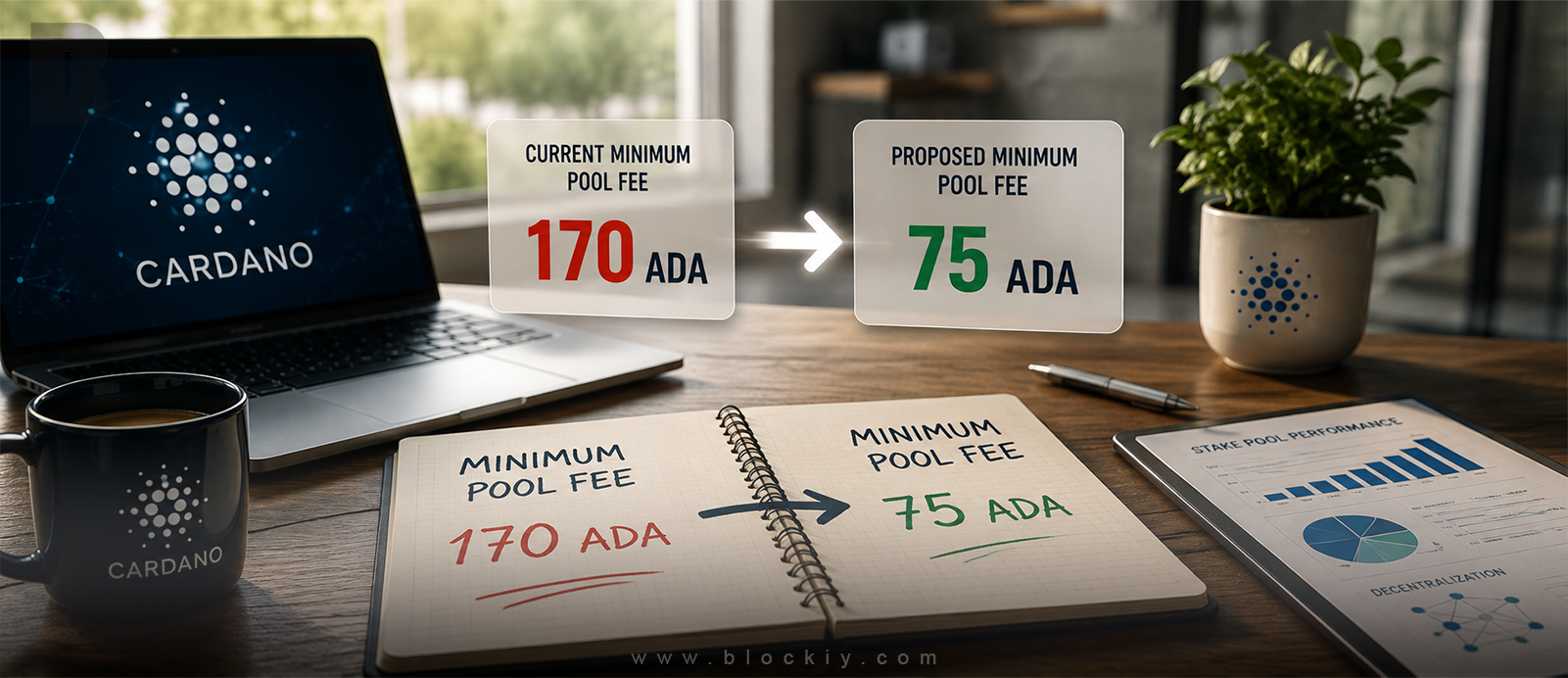
A formal governance proposal has been submitted to reduce Cardano's minimum fixed stake pool fee (minPoolCost) from 170 ADA to 75 ADA. Although the proposal has not yet been enacted on the network, it has already generated extensive discussion among stake pool operators (SPOs), DReps, and ADA holders because of its potential impact on staking rewards, pool economics, and decentralization.
For many Cardano users, the change may appear small—a reduction of just 95 ADA.
In reality, it could significantly change how smaller stake pools compete for delegators and how staking rewards are distributed across the network.
What Is the Minimum Fixed Pool Fee?
Every Cardano stake pool currently earns rewards through two main components:
- A fixed fee (minPoolCost)
- A variable margin fee
The fixed fee is deducted before the remaining rewards are distributed to delegators.
Since the Shelley era, the protocol has required every stake pool using the default parameter to charge at least 170 ADA as its fixed fee per reward distribution.
Regardless of whether a pool produces one block or fifty blocks during an epoch, the fixed fee is applied according to the protocol rules.
This parameter was originally introduced to ensure that stake pool operators could recover part of their operating costs while maintaining reliable infrastructure.
At the time, 170 ADA represented a reasonable balance between operational sustainability and delegator rewards.
However, the Cardano ecosystem has changed considerably since then.
Block rewards have gradually declined as planned by the protocol, infrastructure has matured, and competition among stake pools has increased.
These changes have led many community members to question whether the original minimum fee still serves the network as intended.
Why Was This Proposal Submitted?
The proposal—known as PCP-006—recommends lowering the protocol parameter from 170 ADA to 75 ADA. Its primary objective is to reduce a structural disadvantage faced by smaller and growing stake pools.
Supporters argue that the current minimum fee creates an uneven playing field.
Large stake pools typically produce many blocks each epoch.
Because the fixed fee is spread across a larger reward pool, its impact on individual delegators is relatively small.
Smaller pools, however, often produce only a few blocks—or in some epochs, none at all.
When a pool produces limited rewards, a fixed deduction of 170 ADA can consume a much larger percentage of the total rewards available for distribution.
As a result, delegators comparing pools often see lower returns from smaller pools, even when those operators provide excellent infrastructure and reliable service.
The proposal aims to reduce this imbalance by lowering the fixed deduction while maintaining the existing margin fee mechanism.
Why 75 ADA?
A common question is why the proposal recommends 75 ADA instead of eliminating the minimum fee entirely.
According to the proposal's rationale, 75 ADA was selected as a conservative compromise.
It reduces the burden on smaller pools while still allowing operators to recover a portion of their recurring infrastructure expenses.
The proposal also notes that lowering the parameter restores the relative impact of the fixed fee to levels closer to those seen during the early Shelley era, before declining reserve rewards made the 170 ADA deduction proportionally much larger.
Will This Automatically Become Active?
No.
Submitting a proposal does not immediately change the Cardano protocol.
Like other protocol parameter changes, this proposal must pass through Cardano's governance process.
The proposal will be reviewed and voted on by the network's governance participants, including DReps and other governance bodies, following the procedures established under Cardano's decentralized governance framework.
Only if the required governance approvals are achieved will the protocol parameter be updated.
If the proposal is rejected, the minimum fixed fee will remain at 170 ADA.
At the time of writing, the Parameters Committee has reached consensus in favor of the reduction and intends to move the change forward through governance, with implementation targeted before Q4 2026, subject to successful governance approval.
When Will We Know the Final Result?
There is no single activation date today because protocol parameter changes depend on the governance process.
The proposal must first complete community review and governance voting.
If approved, the parameter change will then be scheduled for implementation during a future protocol update.
This means users should not expect the change immediately after voting concludes.
The final timing depends on governance approval and the technical rollout schedule.
What Does This Mean for Stake Pool Operators?
For many independent stake pool operators, the proposal represents welcome news.
Smaller pools have argued for years that the current minimum fee discourages delegation because it reduces effective rewards during periods of low block production.
A lower minimum fee could make these pools more competitive and improve their ability to attract long-term delegators.
However, not every operator supports the proposal.
Some operators believe the 170 ADA fee helps cover infrastructure costs, including:
- Cloud servers
- Relay nodes
- Monitoring systems
- Backup infrastructure
- Security maintenance
- Domain and website expenses
- Operational support
Reducing the minimum fee means operators that currently rely on the full 170 ADA fixed cost may receive less revenue unless they adjust their margin or improve delegation.
For established pools with significant delegation, the financial impact may be relatively small.
For very small pools operating close to break-even, the decision could require a review of their long-term business model.
What Does This Mean for Delegators?
For ADA holders who delegate their stake, the proposal could lead to higher effective rewards when staking with smaller pools.
The reduction does not increase the total rewards generated by the protocol.
Instead, it changes how those rewards are divided between the operator and delegators.
In many cases, delegators supporting smaller pools would retain a larger share of the rewards generated by that pool.
This could encourage more balanced stake distribution across the network and strengthen decentralization.
However, delegators should remember that staking rewards depend on many factors—not only the fixed fee.
Pool performance, uptime, pledge, delegation size, and operational reliability remain important considerations.
A Good Time to Review Your Stake Pool
Whether or not this proposal is ultimately approved, it serves as a useful reminder to review your current staking choice.
Many ADA holders delegated to a stake pool several years ago and have never checked whether it is still active, well maintained, or consistently producing blocks.
Over time, some stake pools have:
- Retired from the network
- Become inactive
- Produced very few blocks
- Reduced maintenance
- Stopped communicating with delegators
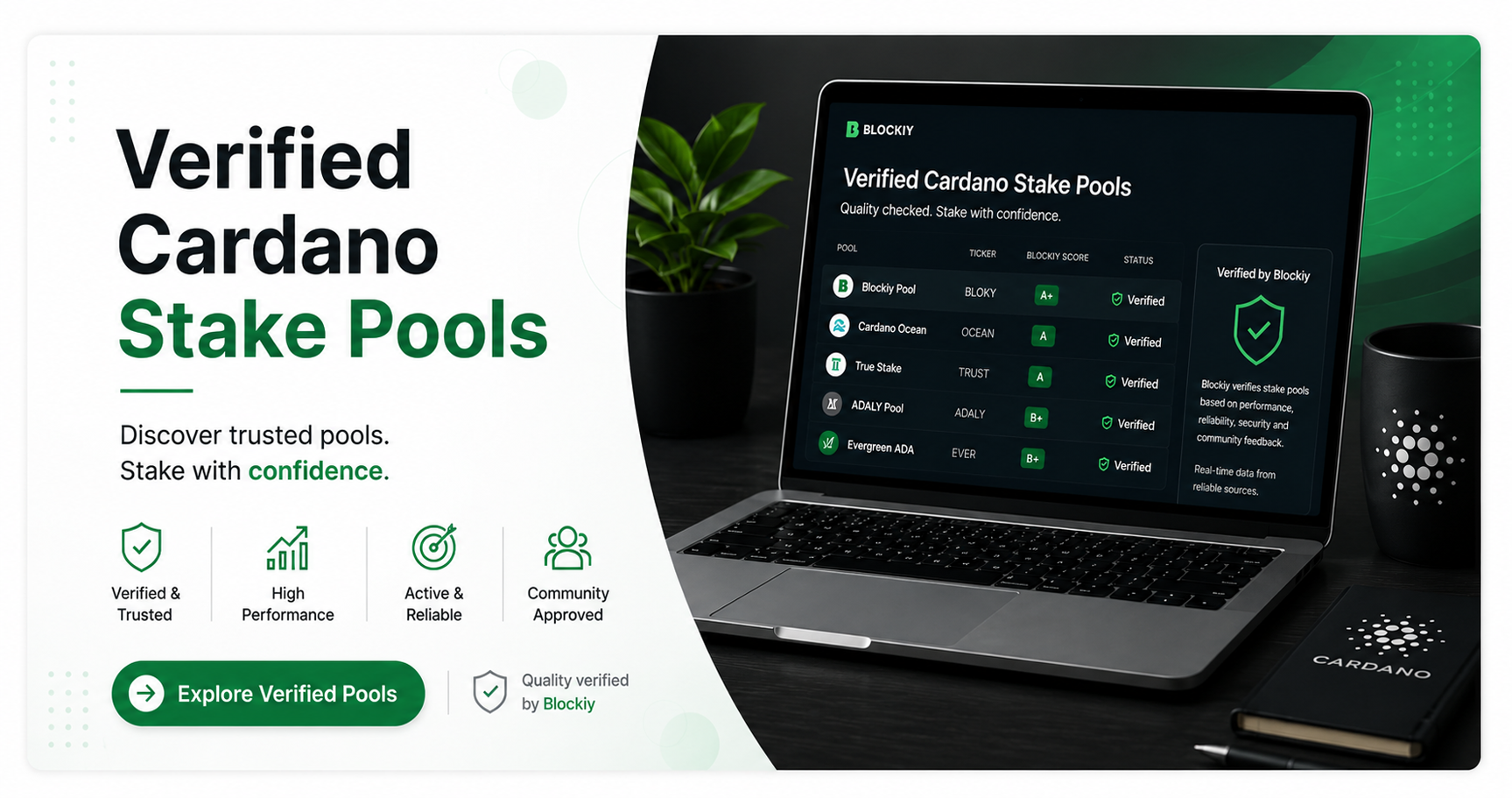
If you are considering changing your delegation, you can explore Blockiy's Cardano Verified Pools directory, which highlights active, community-focused stake pools using transparent information and quality indicators.
Cardano Verified Pools
What Happens If the Proposal Is Approved?
If governance approves the proposal, the protocol parameter will change from 170 ADA to 75 ADA.
Pools that currently use the protocol minimum would automatically have a lower minimum available to them once the parameter takes effect.
Pool operators would then decide whether to:
- Keep charging the new minimum.
- Set a higher fixed fee if appropriate.
- Review and adjust their overall fee structure.
Delegators would not need to move their ADA or take any technical action.
The change would occur at the protocol level.
However, many users may decide to compare staking options again once the new economics become active.
Could This Improve Decentralization?
One of the strongest arguments in favor of the proposal is its potential impact on decentralization.
If smaller pools become more economically attractive, delegators may feel more comfortable supporting them instead of concentrating stake within the largest operators.
A healthier distribution of stake can improve network resilience, reduce concentration, and provide newer operators with a better opportunity to grow.
Supporters therefore see the proposal as more than a fee adjustment.
They view it as an economic change designed to improve competition across the Cardano staking ecosystem.
Critics, however, caution that fee reductions alone will not solve the challenges faced by smaller pools and argue that broader incentive changes may still be needed.
Final Thoughts
Reducing Cardano's minimum fixed stake pool fee from 170 ADA to 75 ADA may appear to be a modest parameter adjustment, but its potential impact reaches far beyond a single number.
For smaller stake pool operators, it could reduce one of the biggest structural disadvantages they have faced since the early years of Cardano staking.
For delegators, it may increase the attractiveness of supporting smaller, community-driven pools while improving reward distribution in certain situations.
Whether the proposal ultimately succeeds will depend on Cardano's decentralized governance process.
Until the vote is complete and the proposal is formally enacted, the current 170 ADA minimum fixed fee remains unchanged.
Whatever the outcome, the discussion itself demonstrates how Cardano's governance system is evolving—allowing the community, rather than a single organization, to debate and shape the economic rules that influence the future of the network.