No ADA for Transaction Fees? Cardano’s Babel Fees Could Change That
Imagine being paid in a Cardano stablecoin and then discovering you cannot send it anywhere because you need a different asset to cover the transaction fee. You have money in your wallet. You know where you want to send it. Yet you still have to acquire ADA before the payment can go through.
For an experienced crypto user, that is an inconvenience. For someone receiving their first blockchain payment, it can be the point where the whole experience stops making sense.
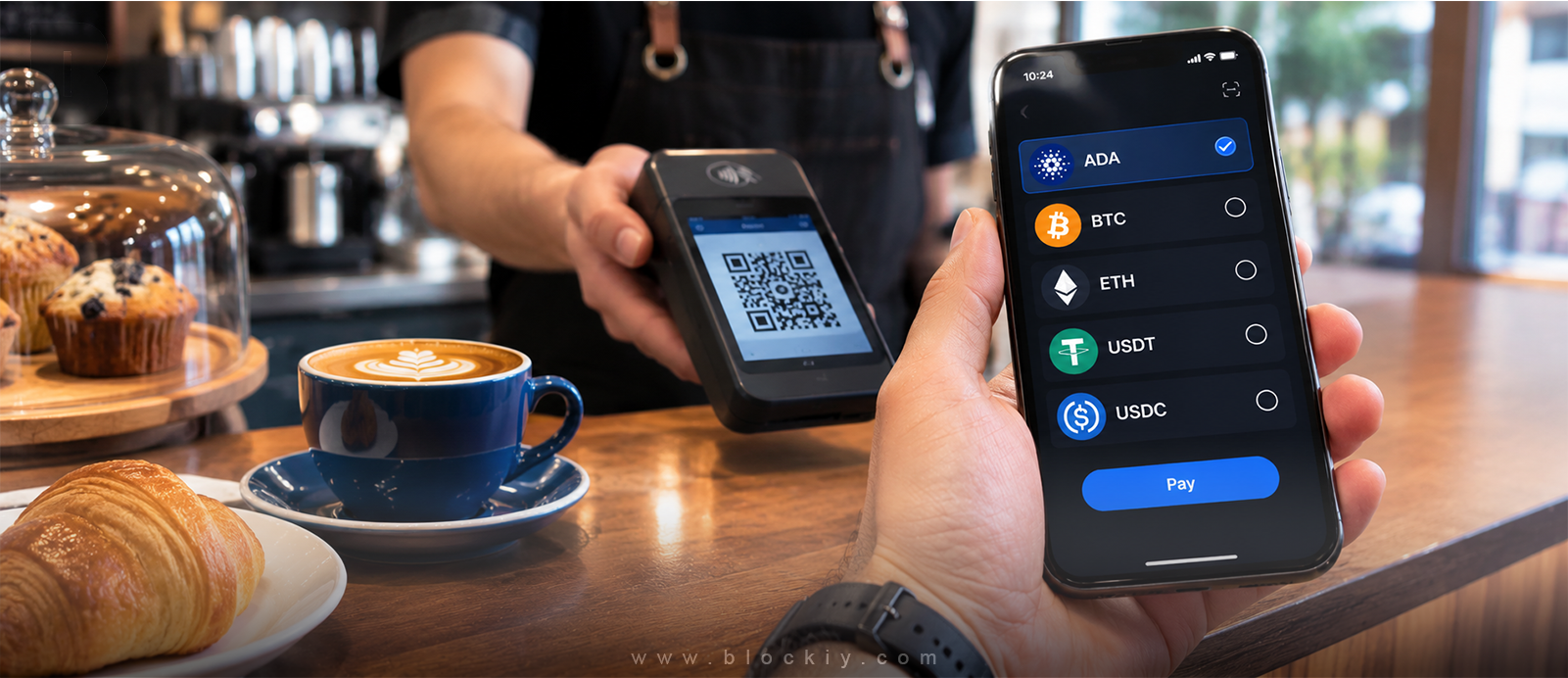
Babel Fees aims to let users pay the cost of a Cardano transaction using a supported token they already hold, while another participant supplies the ADA needed behind the scenes. The user could pay in a stablecoin, for example, without first making a separate ADA purchase.
The idea has reached a fresh development milestone. It has not become a universal wallet feature overnight. Understanding the difference is essential before trying to use it—or assuming you can empty your wallet of ADA.
What is new as of November 17, 2026?
In its November 15 update, Intersect reported that Input Output had delivered a first working version of Babel Fees as a treasury-funded development milestone.
The broader delivery plan places the service architecture and implementation work in 2026, with an initial wallet product targeting production readiness in the first quarter of 2027. The earlier detailed plan identified February 2027 as a target and included Lace integration.
Those are delivery targets, not a guarantee that every Cardano wallet, token, or transaction will be supported on that date. A working implementation, production deployment, and broad wallet adoption are separate stages.
For users today, the practical rule is straightforward: do not assume Babel Fees is available unless your wallet or application explicitly supports the relevant transaction on Mainnet and shows you a clear quote. Development news alone does not change your wallet’s requirements.
What problem does Babel Fees solve?
Most people think about payments in the asset they are using. Someone paying a contractor in a dollar-denominated stablecoin expects to see the amount sent, the fee, and the amount received. They do not expect to manage another asset just to unlock the payment.
Having to buy ADA can introduce extra steps: opening an exchange account, meeting a withdrawal minimum, paying a withdrawal charge, and waiting for funds to arrive. Even when the network fee is modest, the process of obtaining the fee asset can be awkward.
Babel Fees is designed to remove that separate acquisition step for supported flows. It could help a person receiving stablecoin wages, a customer paying an online merchant, or an application serving users who have no interest in managing several balances.
The potential benefit is a simpler payment experience. It does not depend on describing the transaction as free.
Does Cardano stop using ADA for fees?
No. Paying with another token at the user interface is different from changing the asset used to settle the network fee.
Think of a payment service that accepts the currency you hold and settles an obligation in another currency. The conversion happens within the payment flow. The underlying obligation still has to be met.
With Babel Fees, the useful distinction is:
- What the user contributes: a supported token, under agreed terms.
- What the fee-paying participant contributes: the required ADA.
- What the ledger must accept: a completed transaction structure satisfying the applicable fee and balance rules.
Someone has to supply the ADA. The provider needs a reason to do so, such as receiving tokens of sufficient value or being compensated by an application. If no one is willing to accept the offered token on acceptable terms, that payment route cannot be assumed to work.
How it could work, step by step
Consider an illustrative payment from Maya to a designer. Maya wants the designer to receive 50 units of a supported dollar-denominated token. A compatible wallet could present a flow like this:
- Maya enters the recipient and payment amount.
- The wallet checks whether the token and transaction are eligible for a fee-payment service.
- A provider offers to supply ADA in exchange for a specified amount of the token.
- The wallet displays the recipient amount, total token debit, quote expiry, and any additional conditions.
- Maya reviews and signs the transaction authorization.
- The provider completes the required fee coverage, and the completed transaction arrangement is submitted for settlement.
- Maya checks the confirmed transaction and the recipient’s actual amount.
This describes the intended experience, not a claim that a particular wallet already offers these exact screens. The final product determines supported assets, quoting, submission, and failure handling.
A numerical example without pretending the fee is fixed
Suppose a service quotes an all-inclusive token charge of 0.12 units for completing a transfer. Maya chooses to send 50 units to the designer, with the charge added on top.
| Item | Illustrative amount |
|---|---|
| Designer receives | 50.00 token units |
| Quoted charge | 0.12 token units |
| Maya’s total debit | 50.12 token units |
The provider must account for the ADA it supplies, the exchange rate, its own transaction costs, and any service margin. The example does not imply a standard Babel fee, a fixed ADA price, or a live quote.
If Maya instead has exactly 50 units and the interface deducts the charge from that balance, the designer would receive less. A good confirmation screen must make that distinction obvious.
The technology: nested transactions in plain English
The current delivery plan places Babel Fees at the application layer, using the nested-transaction capabilities described in CIP-118.
The core idea is to let a user authorize a part of a transaction arrangement that is incomplete on its own, then let another party complete it within a valid batch. In the fee-payment case, the user’s part can offer tokens while leaving an ADA requirement to be covered. The completing party supplies what is missing.
The whole batch must satisfy the ledger’s rules. This is not permission to leave an unpaid fee permanently on-chain or create ADA from nothing.
Earlier Babel Fees research explored limited liabilities: a short-lived obligation covered by a matching transaction. That research explains the economic idea, but readers should distinguish it from the exact service architecture and wallet behavior being delivered now.
For a user, the important question is whether the signed terms protect the intended payment and spending limits when the provider completes the arrangement. For a builder, that becomes a detailed implementation and testing requirement.
Why large transactions will not tell you the whole story
When a new payment mechanism develops, transaction activity can provide useful context. The Cardano Whale Tracker | Live Large ADA Transactions offers a way to follow large ADA movements alongside developments in the wider ecosystem.
However, a large transfer is not automatically a Babel Fees payment. It might involve exchange operations, wallet consolidation, treasury activity, or another purpose. Transaction size alone cannot establish who paid a fee or why the transaction occurred.
When evaluating adoption, look for explicit wallet support, identifiable transaction structures, documented integrations, and reliable usage measurements. A rise in large ADA transfers would not, by itself, prove that Babel Fees caused it.
“No ADA for fees” is not the same as “no ADA anywhere”
Cardano users often encounter several ADA requirements that should be kept separate.
| Requirement | What it does | What to check in a Babel-supported flow |
|---|---|---|
| Network transaction fee | Pays for processing the transaction | Who supplies ADA and what token charge you accept |
| Minimum ADA in a UTxO output | Accompanies an output under its storage-related rules | Who funds the required output value and where that ADA goes |
| Script collateral | Supports failure accounting for applicable script transactions | Whether the service supports the transaction and how collateral is supplied |
| Application or provider charge | Compensates a service or application | Whether it is included in the displayed total |
A UTxO is an unspent transaction output: a piece of value your wallet can use as an input in a later transaction. Native tokens in ordinary Cardano UTxOs already travel with an ADA amount. A wallet holding tokens can therefore contain ADA without having enough freely usable ADA to complete the transaction the user wants.
The minimum ADA attached to an output is not simply a second network fee that disappears. It remains part of that output’s value. Collateral is another distinct mechanism; its treatment depends on the transaction and any applicable script failure.
CIP-118 describes arrangements that can cover more than fees, including minimum-output funding and collateral. That does not mean every first-generation Babel service will cover every requirement. Check the actual product’s scope before assuming an operation needs no ADA contribution from you.
Which tokens could you use?
The concept is broad, but practical support depends on liquidity and integration. A provider must be willing to receive the asset, value it, and hold or exchange it. The wallet also has to recognize and support the right asset.
The delivery plan describes an initial product supporting at least two major native assets selected during development. Asset examples in planning material are not a final support list.
That leaves several important distinctions:
- A Cardano native token is not automatically supported by a provider.
- A recognizable ticker is not enough to identify an asset; check its policy ID and asset name.
- A representation of an asset on Cardano is different from holding that asset on its original network.
- A provider might support an asset for one transaction type but not every application.
For example, holding bitcoin on the Bitcoin network does not mean a Cardano wallet can automatically debit it for a Cardano fee. Any cross-chain or represented-asset arrangement brings its own support requirements and risks.
Will Babel Fees make transactions cheaper?
It could reduce the inconvenience and expense of acquiring ADA separately. That is different from lowering the underlying network fee.
A provider may charge for liquidity, quote risk, service operation, and transaction construction. A batch can also have a different cost structure from a simple direct transaction. Compare the final amount you pay, rather than assuming payment in a stablecoin is cheaper.
For a small payment, a seemingly minor charge can matter. A hypothetical 0.20-unit charge on a 2-unit payment equals 10% of the payment. The same charge on 200 units equals 0.1%. Neither example predicts live pricing; both show why a clear total matters.
When comparing options, ask:
- What will the recipient actually receive?
- What is my maximum total debit?
- Is the conversion rate included in the quote?
- Are there separate application charges?
- Does the quote include any required ADA accompanying outputs?
- What happens if the quote expires before settlement?
What happens when a provider cannot complete the payment?
Liquidity, software availability, and market conditions can all affect a service. A token might lack a current quote. A provider could go offline. The wallet may need to rebuild an expired request.
Users should be able to distinguish an unsubmitted quote, an authorized but unsettled request, and a confirmed payment. Those states are not interchangeable.
If a payment stalls, inspect its transaction status before trying again. Ask whether an earlier signed request remains valid, how it expires, and whether a retry could duplicate the intended payment. Do not approve a broader spending authorization merely because a support message says it will “unstick” the transaction.
Ledger validity can protect the settlement structure. It does not guarantee provider uptime, a good exchange rate, honest website content, or a flawless wallet interface.
What merchants and application developers should prepare
For a merchant, the appealing outcome is a checkout where the customer pays in the same token used for the purchase. Getting that right requires more than adding a fee-token selector.
Make the receipt unambiguous. Separate the purchase amount, customer charge, merchant deduction, and final amount received. If the application subsidizes the fee, identify that subsidy without implying the network itself charges nothing.
Define the unavailable-service path. Decide what happens when there is no supported token quote or the provider is down. A clear request for another payment method is better than an indefinite loading screen.
Test exact-payment cases. A customer with precisely the invoice amount must understand whether fees are added or deducted. Test quote expiry, duplicate submissions, insufficient token change, and transaction rejection.
Treat support as a capability matrix. Record network, wallet version, token identity, transaction type, required provider, and any limits. “Supports Cardano” is too broad to describe a reliable payment integration.
These are product requirements worth preparing now. They do not depend on promising a launch date that the ecosystem has not reached.
Does this change ADA staking or demand for ADA?
Babel Fees does not, by itself, change your pool delegation, transfer your ADA, or introduce a new staking reward rate. A wallet fee feature and the staking reward mechanism are different parts of the system.
ADA still has to be supplied for the underlying fee arrangement. The possible change is who acquires and manages it: a provider may handle that task for many users.
It is tempting to turn this into an immediate price forecast. That would skip the difficult questions: how many people use the service, how much activity is genuinely new, what fees are paid, and how providers manage their balances. Easier onboarding could support usage, but it does not establish a particular ADA price or staking return.
Frequently asked questions
Can I already pay every Cardano fee with a stablecoin?
No. The November 2026 milestone is a working-version announcement, not universal Mainnet wallet availability. Confirm the exact support offered by the wallet or application you intend to use.
Are Babel Fees free transactions?
No. The cost is covered by someone. You may compensate that participant in another token, or an application may subsidize the cost.
Will any token in my wallet work?
Not necessarily. Both the service and wallet need to support it, and someone must accept it on suitable terms. A token’s presence in a wallet does not guarantee a liquid fee-payment market.
Is Babel Fees the same as sponsored transactions?
They can share technical building blocks, but their economics differ. In a Babel-style exchange, the user offers tokens for ADA coverage. With sponsorship, an application or another party may absorb the cost under its own policy.
Should I remove my remaining ADA now?
Do not make that decision from a development headline. Your current wallet and intended transactions may still require ADA for fees, outputs, or collateral. Check those requirements first.
Will I need to move my wallet or reveal my seed phrase?
A legitimate fee-payment feature should not require you to disclose your recovery phrase to a website or provider. Review the transaction authorization in your trusted wallet. An offer to “activate Babel Fees” by collecting your seed phrase is a theft attempt.
A simpler way to use Cardano, if the whole payment flow works
Babel Fees addresses a familiar frustration: holding a useful asset while being unable to transact because you lack the fee asset. The proposed experience lets a user contribute a supported token while another participant handles ADA coverage.
The milestone is meaningful, but the next steps matter: production readiness, wallet integration, liquidity, transparent pricing, and reliable failure handling. Those determine whether the feature becomes useful outside a demonstration.
For now, watch what your wallet actually supports and keep enough ADA for the operations you still need. When a Babel-supported payment becomes available, judge it by the confirmed total, the recipient’s amount, and the terms you sign. That is where a promising idea becomes a practical improvement.