Trust Wallet Brings Real Pokémon Cards to Solana
Trust Wallet added trading-card packs backed by physical collectibles to its mobile app on November 25, 2026. The Pokémon packs are supplied by Collector Crypt and paid for in USDC on Solana. Each pack reveals one randomly selected graded card. A token representing that specific card goes into the buyer's wallet, while the physical card stays in Collector Crypt's vault unless the holder requests delivery.
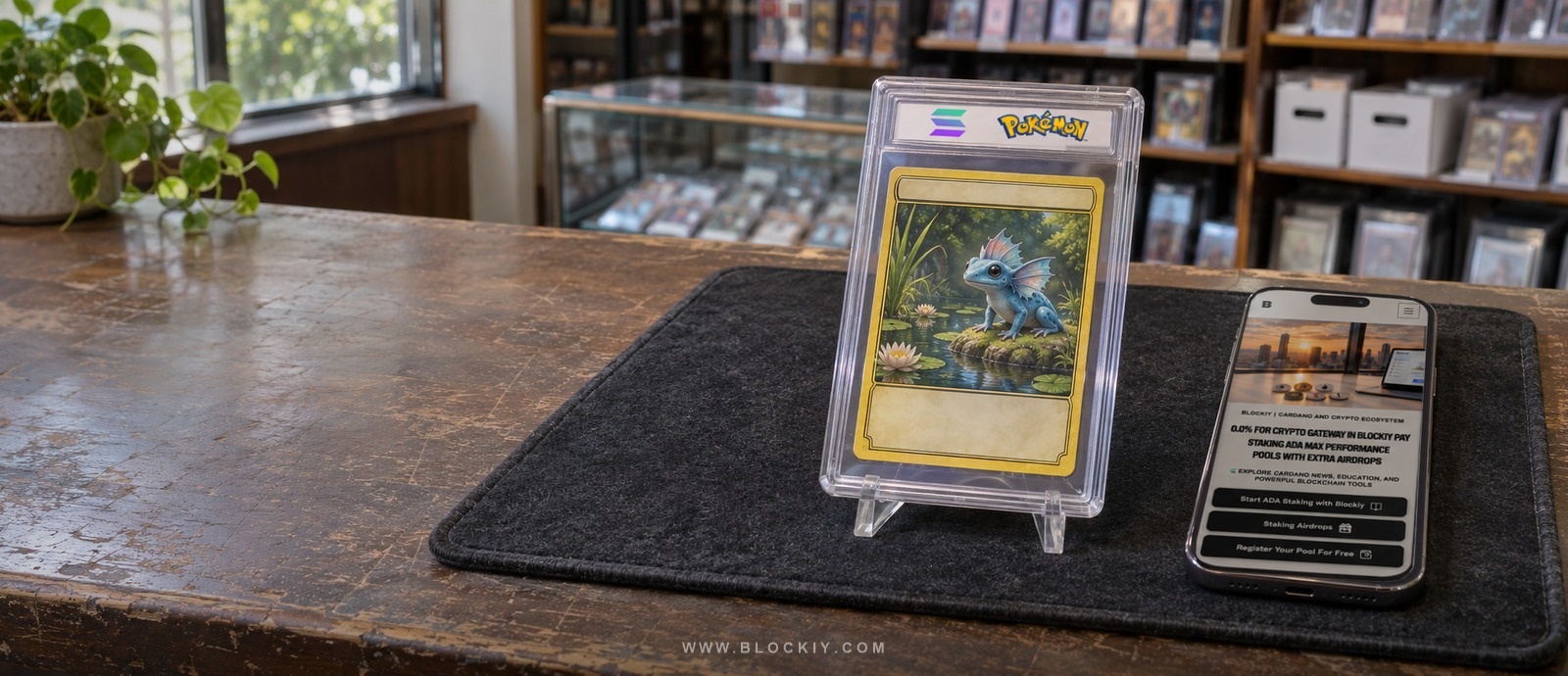
The banner illustrates the concept; it does not show a specific collectible offered in the app.
The new part is opening these packs inside Trust Wallet, not the invention of tokenized trading cards. Basketball cards and watches launched alongside Pokémon. The feature is limited to eligible users in supported regions. It is not an official Pokémon Company release.
One card, three different records
The copy in your wallet, the grading certificate and the physical card serve different purposes. Solana records which address controls the token and when it moved. The grading label identifies the card and its assessed condition. The vault operator is responsible for storing the actual item and releasing it to the holder through its redemption process.
These records can be checked separately. For example, two cards could have the same artwork and grade but different certificate numbers. Comparing the card's set, number and grading certificate against the physical listing helps you identify the specific copy. Checking the token's transaction history tells you where it moved, not whether the grading label is authentic or a parcel has shipped.
What a pack price does and does not tell you
Pokémon packs started at 25 USDC at launch. Each contains one card, not a bundle, and paying more does not let you choose which card comes out. The app shows the pack price, a pool of possible cards and odds by rarity tier. A high maximum pull value tells you what might be possible, not what most buyers will get.
Where available, Collector Crypt makes a buyback offer in USDC. Trust Wallet described a 72-hour window at launch; check the specific card’s countdown for the actual deadline. The offer reflects Collector Crypt's valuation and is not a promise to return the pack price. Compare the actual offer to what you paid and use the countdown on the individual card rather than assuming you have extra time after opening. When the offer ends, any later sale depends on finding a buyer. The amount shown on a listing is not a completed sale.
For example, if a pack cost 25 USDC and the visible offer were 18 USDC, accepting would leave a 7 USDC difference before any other costs, even if the app's estimated value were higher. Those figures are illustrative, not a live quote.
A wallet can also receive tokens as rewards without buying a random pack. Blockiy’s Cardano staking airdrop is one example: eligibility is based on delegation, not on what a pack reveals. It is a separate program and does not involve Solana collectibles. See How Blockiy’s Staking Airdrop Works
How physical delivery differs from a wallet transfer
Moving the token to another compatible wallet does not ship the card. Collector Crypt handles physical redemption separately. Its redemption model burns the token when exchanging it for the physical item, so the same token cannot keep circulating as a claim on a card that has left the vault.
If the goal is to put the card on a shelf rather than keep a token in a wallet, the useful checks are whether Collector Crypt serves the delivery address, what it charges for shipping, and whether import costs apply. Check the exact card details and order terms before authorizing redemption. Access to the pack feature does not by itself establish that every shipping destination or buyback route is available.
What this launch shows about real-world assets
Putting the record on Solana makes the token portable. It does not make the physical card portable on its own. The card still needs a vault, an accurate inventory and a provider that can ship it. That is the practical test for a collectible backed by a physical object: can you identify the exact item, see who holds it, and understand what it takes to get it delivered?